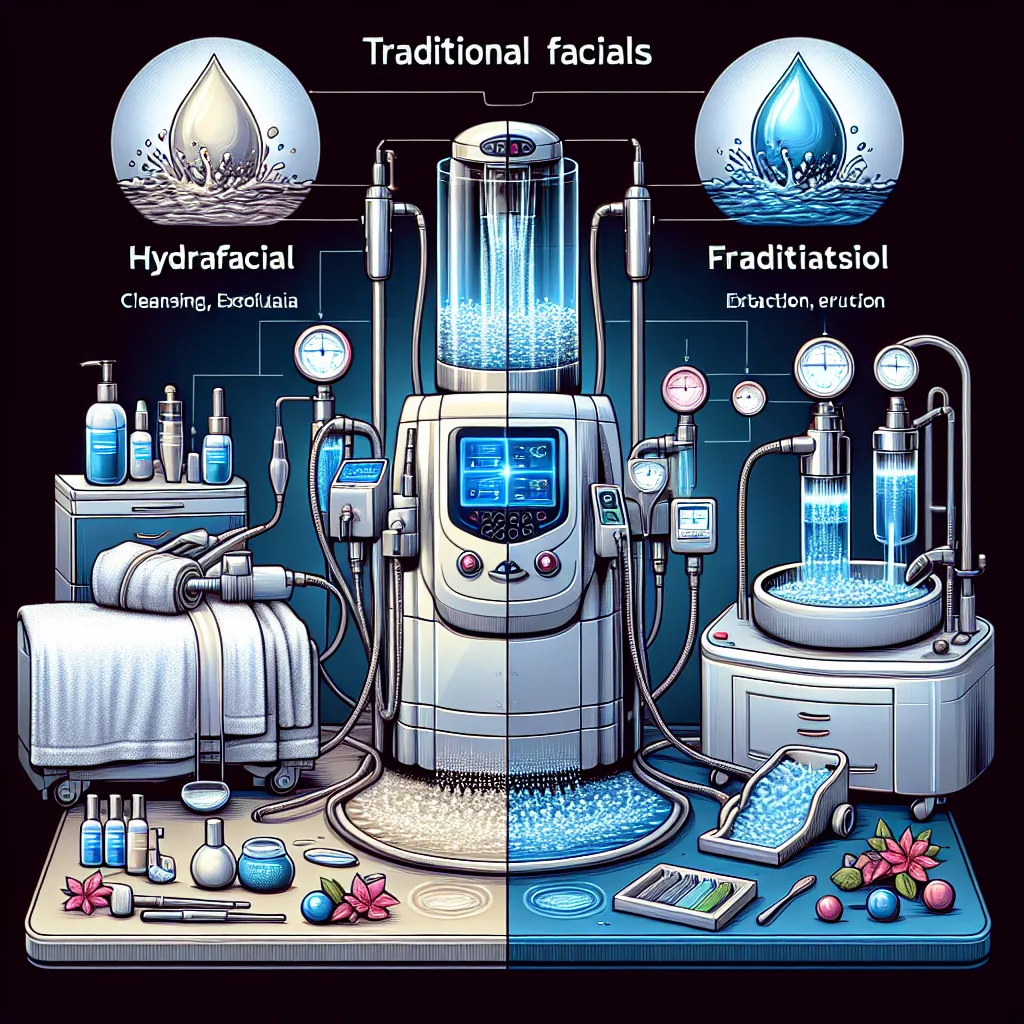
HydraFacials and traditional facials are both popular skin treatments that aim to improve the overall appearance and health of the skin. However, there are some key differences between the two that should be considered when deciding which treatment is best for an individual's skin concerns.
One major difference between HydraFacials and traditional facials is the use of technology. HydraFacials use a specialized machine that utilizes a four-step process of cleansing, exfoliation, extraction, and hydration to deeply cleanse and
A HydraFacial is a skincare treatment that uses a specialized machine to extract impurities from the skin while simultaneously infusing it with nourishing serums. It is a multimodal facial that can simultaneously exfoliate, cleanse, extract, and hydrate the skin.
A traditional facial is a manual skincare treatment that typically includes cleansing, steaming, extraction, and massage to improve skin health and appearance. It focuses on deep cleansing and nourishment of the skin using topical products and massage techniques.
While both treatments focus on improving skin health and appearance, there are several key differences between HydraFacials and traditional facials. Here are the main differences to consider when deciding which treatment is best for you:
1. Method of extraction: As mentioned earlier, a HydraFacial uses a specialized machine to extract impurities from the skin, while a traditional facial relies on manual extraction techniques. This can make the HydraFacial more efficient and less painful.
2. Customization: A HydraFacial can be customized based on your skin type and specific concerns, whereas a traditional facial may use a set protocol or products for everyone. This makes the HydraFacial more tailored to your skin's needs.
3. Treatment time: A traditional facial typically takes around 60-90 minutes, while a HydraFacial can be completed in just 30 minutes. This makes it a great option for those with a busy schedule or who want a quick pick-me-up for their skin.
4. Downtime: Traditional facials may leave your skin red or irritated for a few hours after the treatment, while a HydraFacial has no downtime. This makes it a more convenient option, as you can go about your daily activities immediately after the treatment.
The answer to this question depends on your specific skin concerns and preferences. If you have sensitive skin or are concerned about pain during extraction, a HydraFacial may be a better option. If you prefer a more relaxing experience and are looking to target specific skin concerns with a personalized approach, a traditional facial may be the way to go.
Both HydraFacials and traditional facials have their benefits and are effective at improving skin health and appearance. It's important to consult with a skincare professional to determine which treatment will best address your unique skin needs. Whichever option you choose, regular facials can make a significant difference in maintaining healthy, radiant skin.

Say it is your first time in the booking notes and your provider will take it from there.