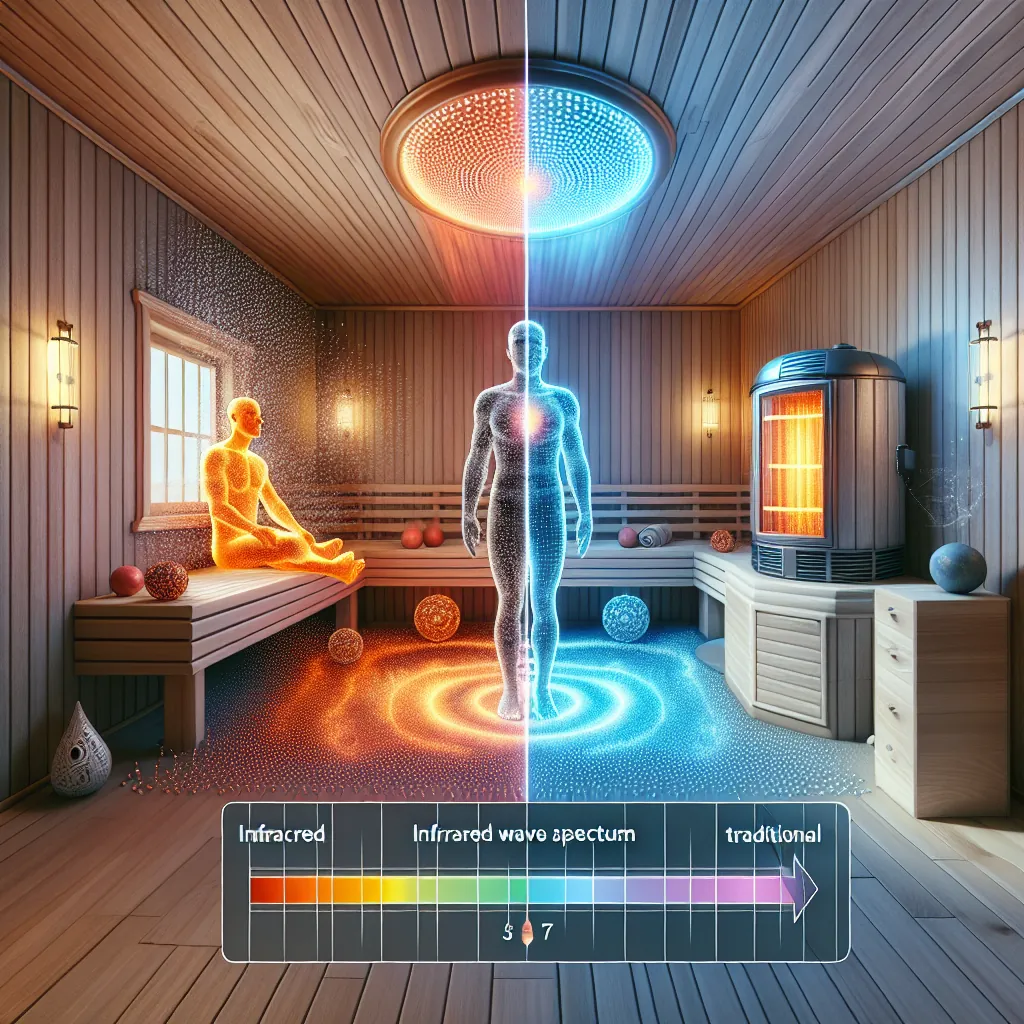
Infrared saunas and traditional saunas have gained popularity in recent years as a means of relaxation and health benefits. However, there are key differences between the two that individuals should be aware of when deciding which type of sauna to use.
Firstly, infrared saunas use infrared heaters to emit light waves that directly heat up the body, while traditional saunas use heaters to heat up the air in the room. This means that infrared saunas can produce the same level of heat but at lower
An infrared sauna is a type of sauna that uses infrared heaters to emit radiant heat, perceived as gentle warmth. This type of sauna is often referred to as a "dry sauna" because it does not involve steam or a high level of humidity. The infrared rays penetrate the body and create a warming effect, as opposed to heating the air around you like a traditional sauna.
Infrared saunas use an invisible spectrum of light to directly heat the body. This light penetrates the skin and goes deep into the body's tissues, causing a detoxifying sweat at a lower temperature compared to traditional saunas. On the other hand, traditional saunas heat the air around you, causing you to sweat and release toxins indirectly.
Infrared saunas have gained popularity due to their numerous health benefits. Some potential benefits include improved circulation, relief of muscle pain and tension, boosting the immune system, and detoxification. The heat also increases your heart rate, which can aid in weight loss and improved cardiovascular health. Traditional saunas offer similar benefits but may involve higher temperatures and higher humidity levels.
One of the key differences between infrared and traditional saunas is the cost of operation. Infrared saunas use panels or heaters that require less energy compared to traditional saunas, which require a lot of energy to heat the air. This results in lower utility bills and a more eco-friendly option in the long run. Additionally, traditional saunas may require more maintenance and repairs due to the use of steam and higher temperatures.
The answer to this question depends on personal preference and intended use. If you are looking for a more relaxing and gentle heat experience, an infrared sauna might be the right choice for you. However, if you prefer higher temperatures and higher levels of humidity, a traditional sauna may be more suitable. It's important to consult with a healthcare professional before using either type of sauna, especially if you have any underlying health conditions.
In conclusion, both infrared and traditional saunas offer unique experiences and health benefits. Choosing one over the other ultimately depends on your personal preference and intended use. Regardless of which option you choose, incorporating regular sauna sessions into your routine can have a positive impact on your overall health and well-being.

Say it is your first time in the booking notes and your provider will take it from there.