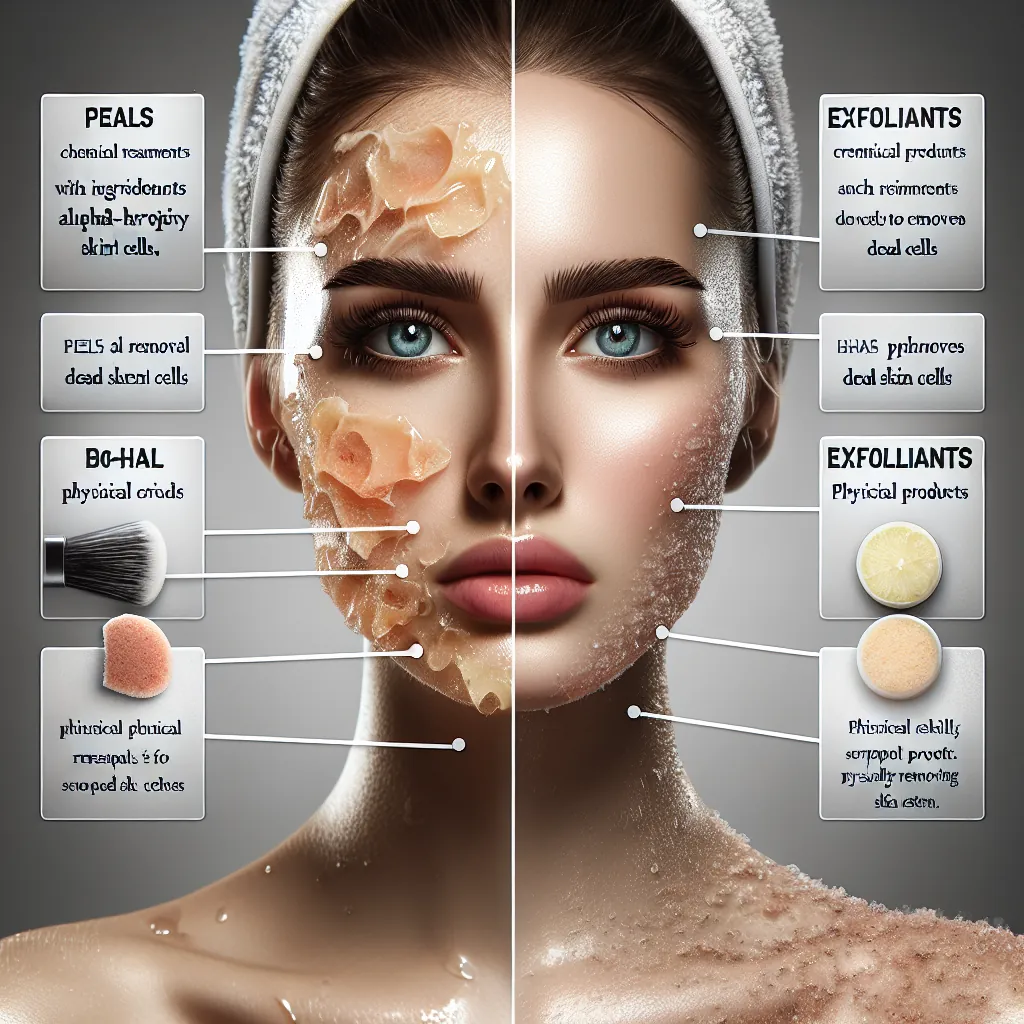
This article explores the differences between peels and exfoliants, two popular skincare treatments for improving skin texture and appearance. Peels are chemical treatments that use ingredients like alpha-hydroxy acids (AHAs) or beta-hydroxy acids (BHAs) to remove dead skin cells and reveal fresher, smoother skin. On the other hand, exfoliants are physical or mechanical products, such as scrubs or brushes, that physically remove dead skin cells. While both peels and ex
Exfoliation is a crucial step in any skincare routine, as it helps removes dead skin cells and debris from the surface of your skin. This process not only reveals brighter, smoother skin but also helps to unclog pores and promote cell turnover. One of the most common ways to exfoliate is through the use of peels or exfoliants. Both of these methods can help achieve the same goal, but it's important to know the difference between them in order to choose the best option for your skin.
Peels are chemical exfoliants that use acids such as glycolic, lactic, or salicylic acid to dissolve the top layer of dead skin cells. They come in different strengths and can be performed by a professional or at home. Professional peels are typically stronger and provide more dramatic results, while at-home peels are gentler and more suitable for regular use.
The main advantage of using peels is that they can penetrate deeply into the skin, targeting multiple layers for a more thorough exfoliation. This makes them ideal for treating concerns such as fine lines, wrinkles, and hyperpigmentation. However, they can also be quite harsh on the skin and may cause irritation, especially for those with sensitive skin. They also require some downtime for the skin to heal and may not be suitable for those with active acne.
Exfoliants, on the other hand, are physical exfoliants that use tiny granules or particles to physically scrub away dead skin cells. They come in various forms, such as scrubs, brushes, or loofahs, and are typically gentle enough for everyday use. There are also chemical exfoliants in the form of enzymes that work by breaking down the bonds between dead skin cells.
One of the main benefits of exfoliants is that they are more gentle on the skin compared to peels. They also provide immediate results, leaving the skin smoother and softer after use. However, they may not be as effective at targeting deeper layers of the skin like peels can. Over-exfoliation can also lead to irritation and cause damage to the skin barrier, so it's important to choose the right type and frequency of exfoliation for your skin.
In conclusion, both peels and exfoliants serve the purpose of removing dead skin cells, but they differ in their approach and potency. Peels are better for targeting specific skin concerns, while exfoliants are suitable for regular use to maintain healthy skin. Ultimately, the best choice depends on your skin's specific needs, so it's important to consult with a dermatologist to determine the best option for you. Remember to always follow proper instructions and listen to your skin to avoid any potential damage.

Say it is your first time in the booking notes and your provider will take it from there.